Şıldırşop
He did not defeat the guardians. He solved the failure in their system.
An oral tale narrated by a family storyteller from Sivas. Reconstructed from memory. Read through Bionic Leadership and systems thinking.
The Tale That Stayed
Some stories survive not because they are written down, but because they solve a problem that keeps returning. Şıldırşop is one of those stories.
It was narrated by a family storyteller from Sivas — not from a book, not from an archive. It arrived the way oral tradition always arrives: through a voice, in a room, to people who needed it.
This study reconstructs that tale and reads it through two lenses: Bionic Leadership and systems thinking. Not to explain the tale away, but to ask what it already knew.
The Name
Şıldırşop is not a common Turkish word. It does not appear in standard dictionaries. It arrives in the tale as a name — and names in oral tradition are rarely accidental.
The sound of the word carries something: a sudden movement, a disruption, a thing that does not fit the expected pattern. Whether the name predates the character or grew from him is unknown. What matters is that the name stayed.
In Bionic Economy terms, a name that survives without institutional support is already a signal. It means the concept it carries was useful enough to be remembered.
The Remembered Tale
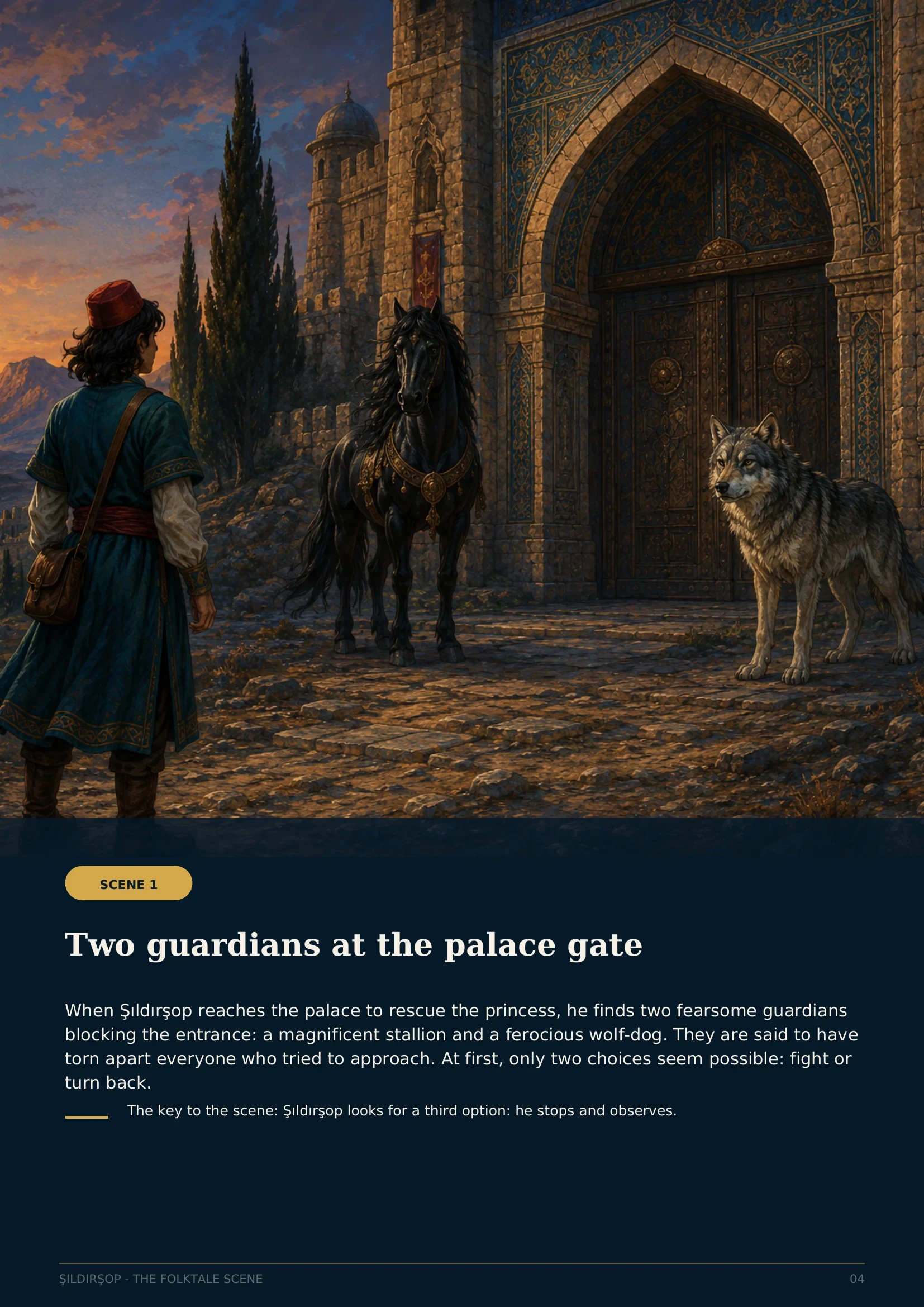
A young man named Şıldırşop set out to reach a place that many had tried to reach before him. The road was guarded. Those who came before him had tried to overpower the guardians — and failed.
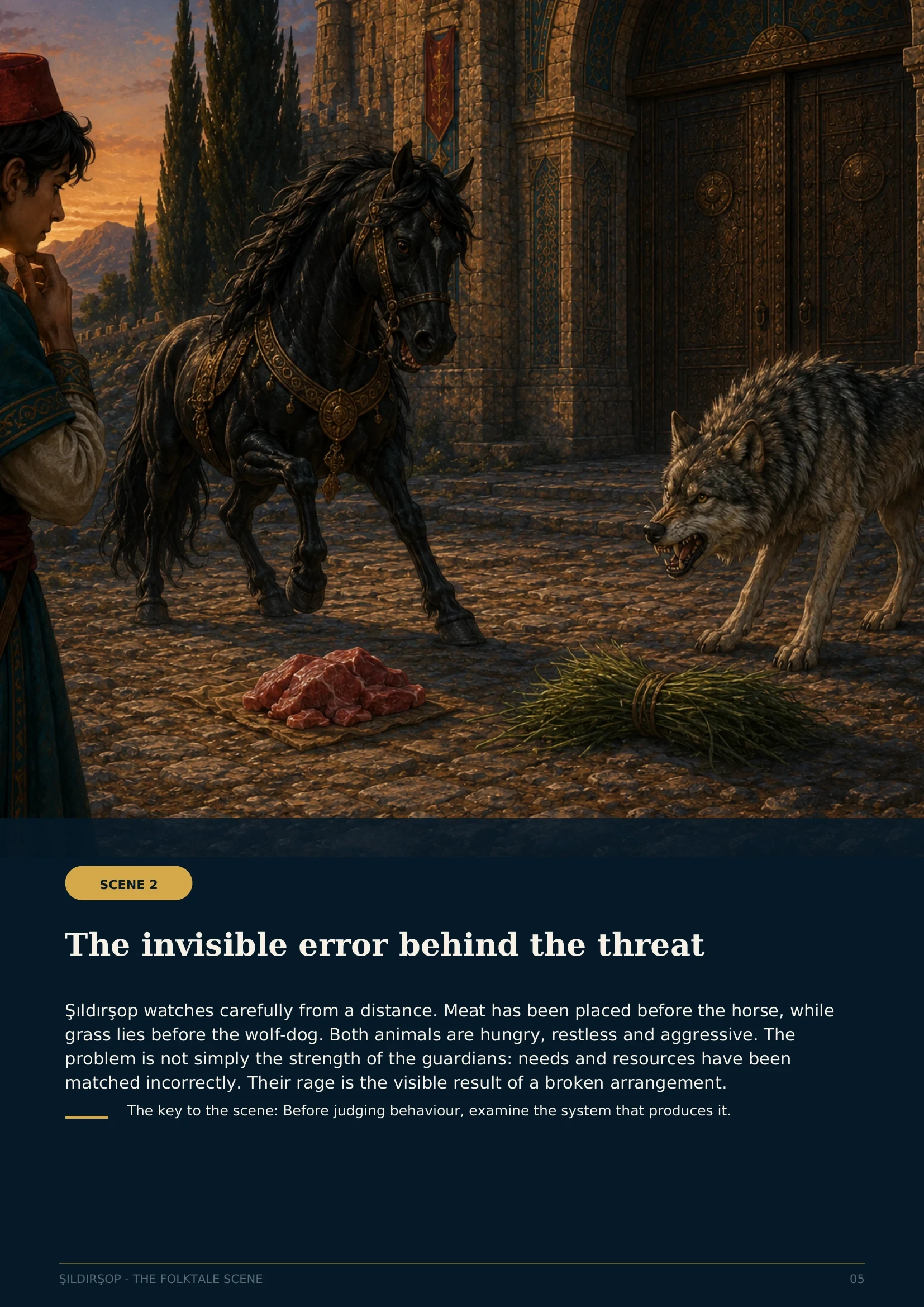
Şıldırşop did not try to overpower them. He watched. He asked questions. He learned what the guardians actually needed — not what they demanded, but what they were missing.
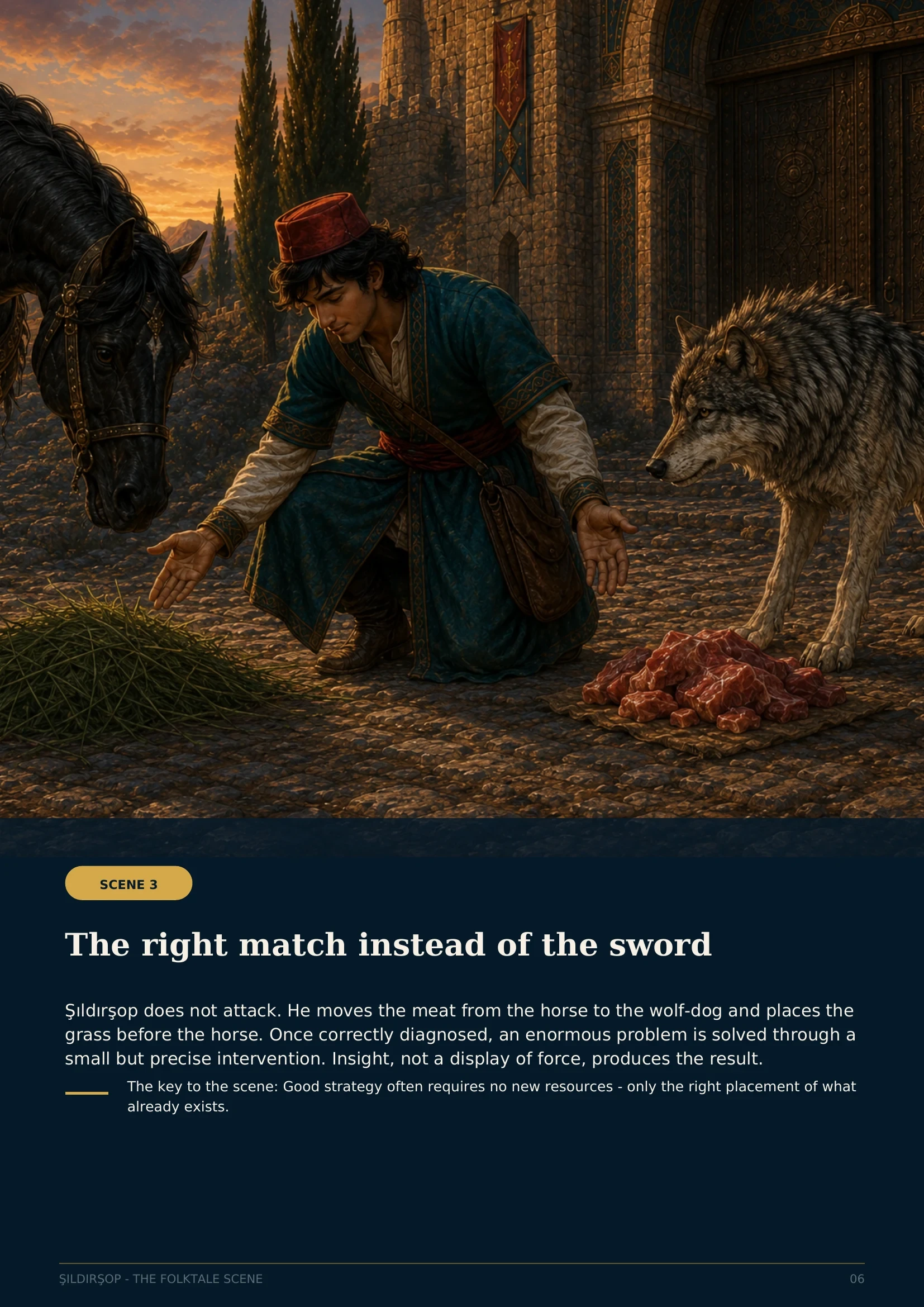
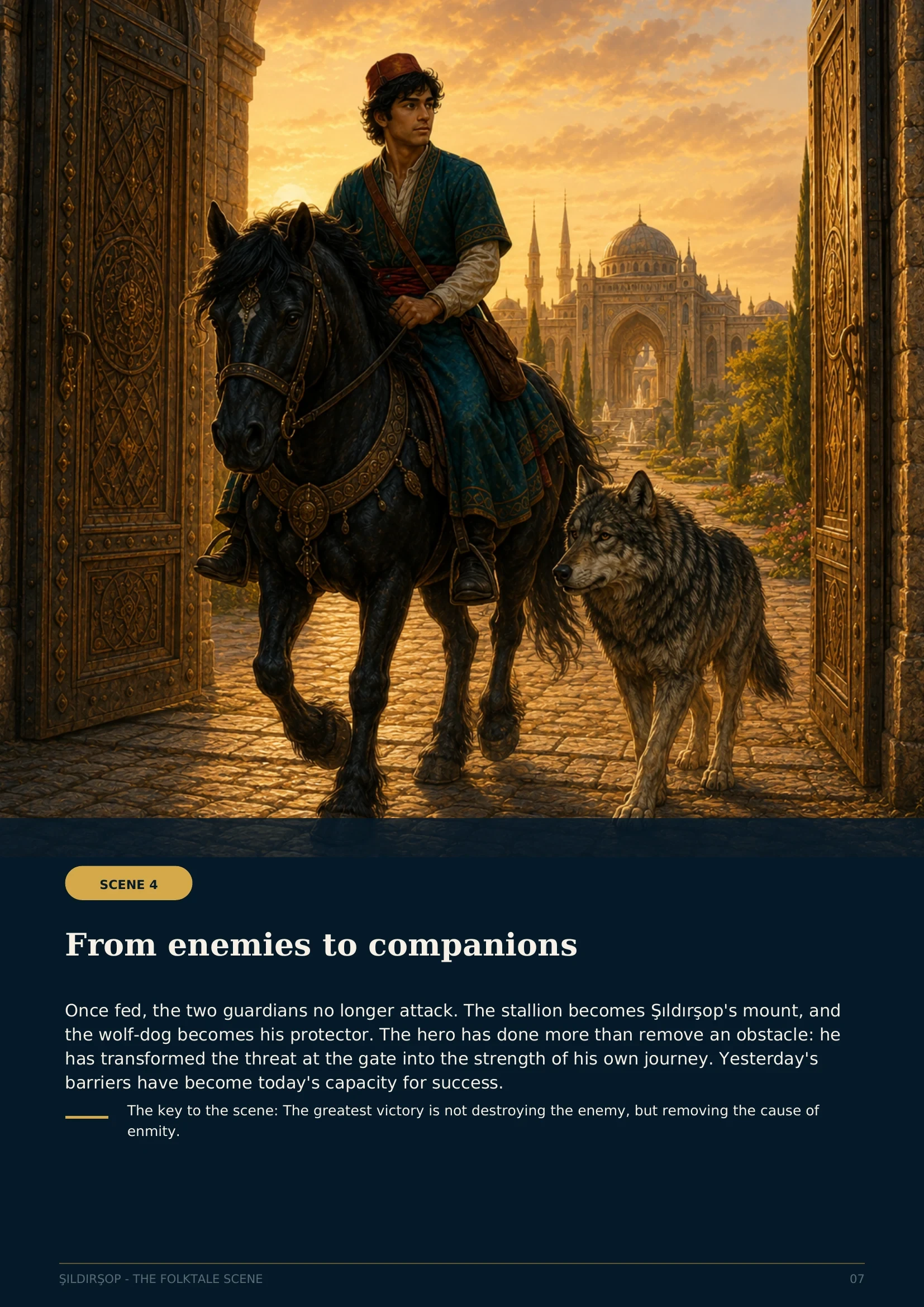
The guardians were not enemies. They were a broken system. They demanded tribute because they had no other way to sustain themselves. Şıldırşop gave them what they needed. Not as a bribe — as a solution.
The guardians stepped aside. Not because they were defeated. Because the problem that made them guardians had been solved.
Şıldırşop continued. The road was open.
This reconstruction is based on a family oral narration from Sivas. It is not a verbatim transcript. Details may differ from other regional variants. The analytical reading that follows is applied to this reconstructed version, not to a canonical text.
The Motif in Other Tales
The pattern Şıldırşop enacts — solving the system rather than defeating the obstacle — appears across Turkish and Anatolian oral tradition, though rarely named as such.
In most hero tales, the guardian is overcome by strength, cunning, or magic. Şıldırşop's move is different: he identifies the structural failure that created the guardian in the first place.
- Keloğlan tales — the fool who succeeds by understanding what others overlook
- Nasreddin Hoca — resolution through reframing the problem, not the answer
- Dede Korkut cycles — alliance built through demonstrated usefulness, not conquest
- Anatolian threshold tales — the gatekeeper transformed by being seen correctly
What distinguishes Şıldırşop is the explicitness of the systems diagnosis. The tale does not merely show a clever solution — it shows a character who reads the system before acting on it.
This is the Cultural DNA strand this study traces: the capacity to distinguish between the symptom (the guardian) and the cause (the broken system behind the guardian).
Cultural DNA Strands
Obstacles are symptoms. The system behind them is the actual subject.
Transformation requires understanding what the other party actually needs — not what they demand.
Alliance is more durable than victory. A defeated guardian returns. A solved problem does not.
The hero's intelligence is diagnostic before it is strategic.
Oral tradition preserves systems knowledge in narrative form because narrative is memorable and transferable.
A name that survives without institutional support carries a concept worth examining.
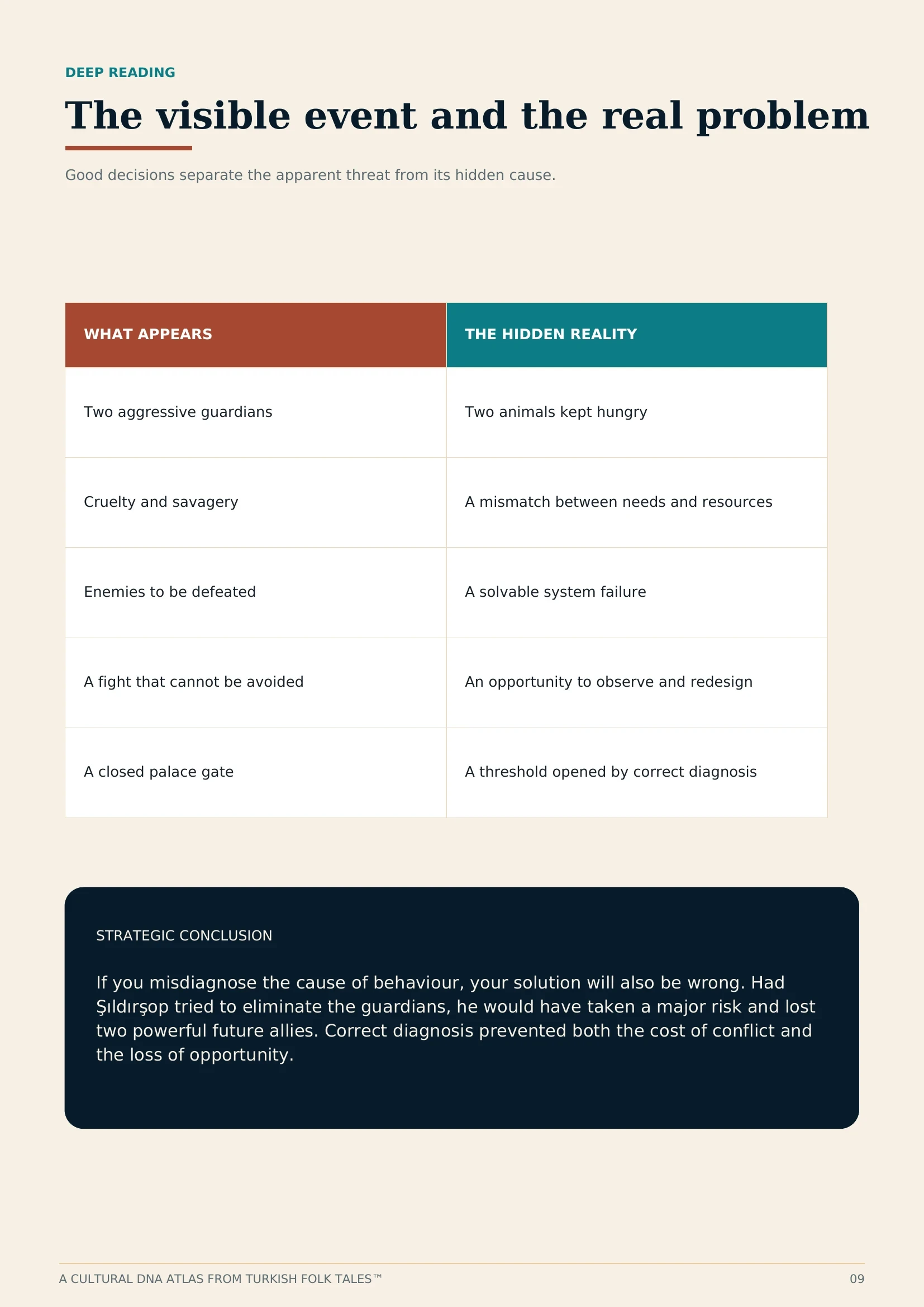
The Million-Dollar Lesson
| What the tale shows | What Bionic Leadership calls it |
|---|---|
| Şıldırşop watches before acting | Systems diagnosis precedes intervention |
| He asks what the guardians need | Stakeholder needs analysis — not positional bargaining |
| He gives them what they are missing | Value creation as the entry condition for cooperation |
| The guardians step aside voluntarily | Sustainable alignment — not compliance under pressure |
| The road stays open | Systemic resolution — the problem does not regenerate |
The leader who defeats the obstacle creates a recurring cost. The leader who solves the system behind the obstacle creates a permanent opening.
The Bionic Economy Reading
Bionic Economy is not a metaphor borrowed from biology. It is a framework for reading how systems sustain themselves — and how they fail.
Şıldırşop's move is a Bionic Economy move: he identifies the energy deficit in the guardian system and supplies what is missing. The result is not a transaction. It is a structural repair.
In organizational terms: the leader who enters a blocked system and asks 'what does this system need to function?' is operating in Bionic Economy mode. The leader who asks 'how do I get past this?' is operating in extraction mode.
Extraction mode produces short-term passage and long-term friction. Bionic mode produces durable cooperation.
The Bionic leader does not ask how to win. They ask what the system needs to stop producing losers.
Application Questions
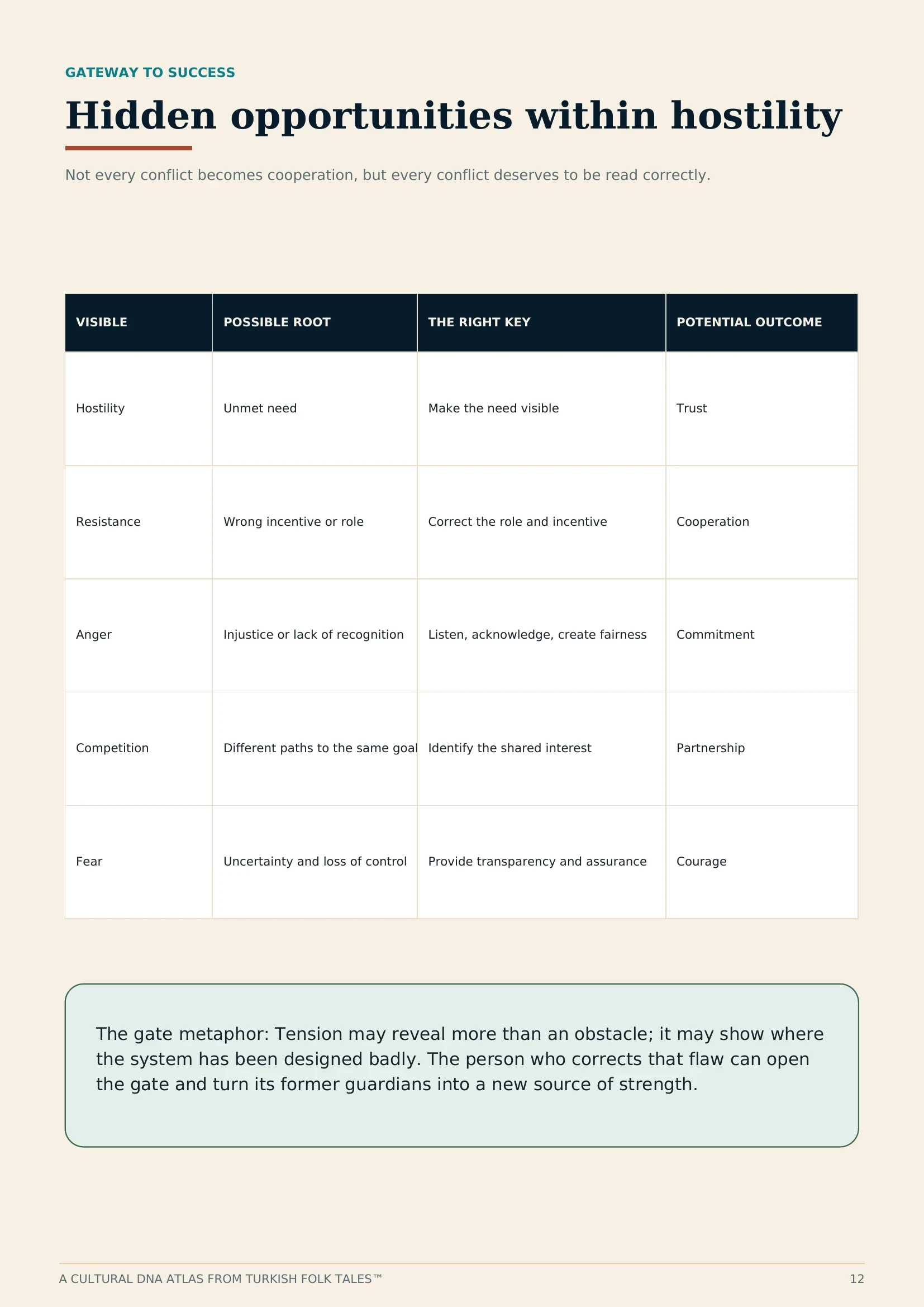
In your current context, what is the 'guardian' — and what system failure created it?
What does the guardian actually need, as distinct from what it demands?
What would it mean to solve the system rather than overcome the obstacle?
Which of your current 'victories' are actually recurring costs in disguise?
What oral or informal knowledge in your organization carries systems intelligence that has never been formalized?
What the Tale Already Knew
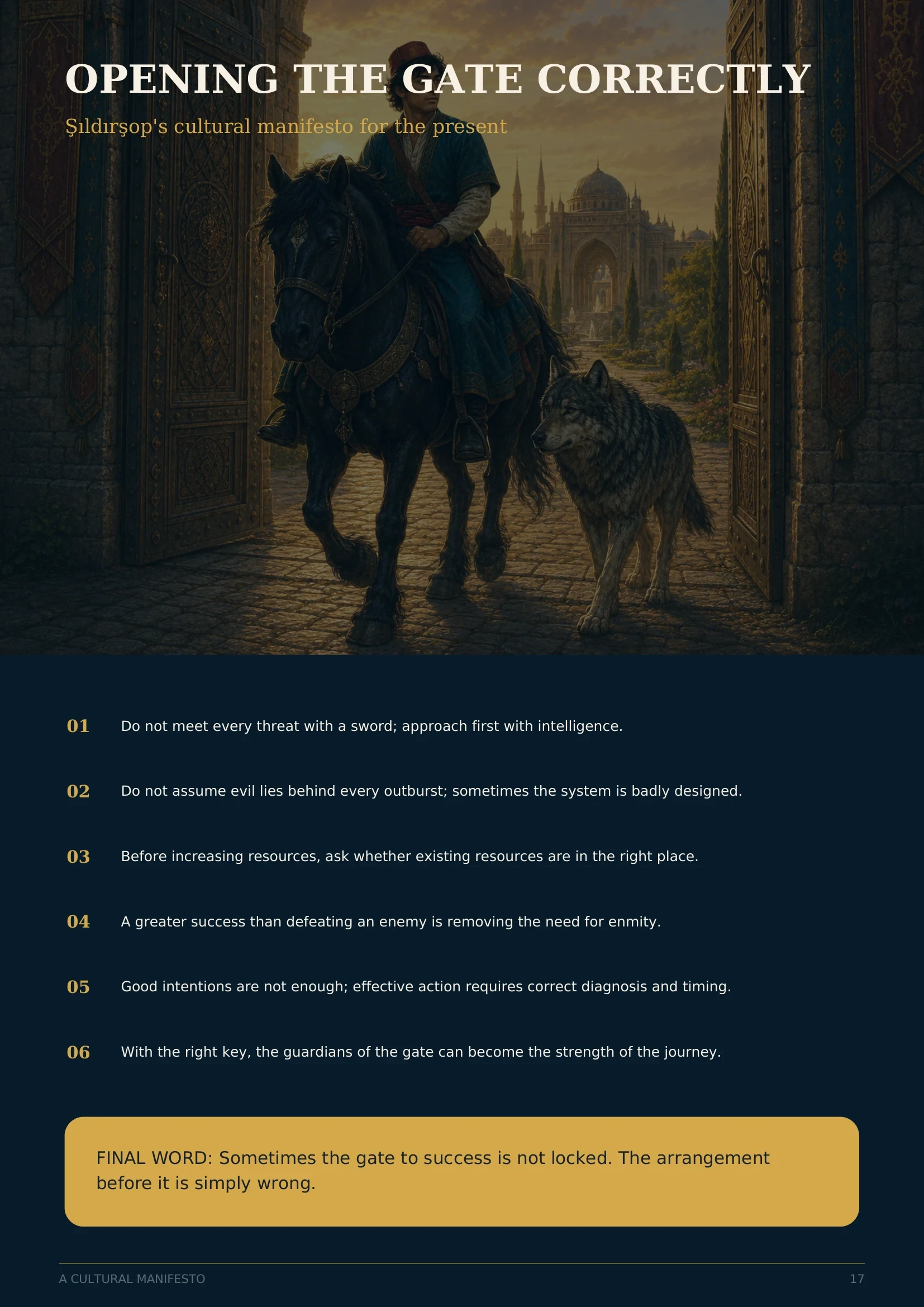
Şıldırşop was not a strategist. He was a listener. The tale preserved what the strategists forgot: that the most durable path through a blocked system is the one that repairs the block.
Source & Textual Note
This study is based on an oral narration by a family storyteller from Sivas. The reconstruction is the author's own, based on memory and analytical re-reading. No written source text exists for this variant. Comparisons with other tale types are the author's analytical observations, not citations from folklore scholarship. This is a Bionic Leadership reading, not a folkloristic study.
About the Author
Volkan Nurettin Korkmazer
Senior Economist
Bionic Economy Fellow
BGAM™ Research
ECRMA
Volkan Korkmazer reads oral tradition as systems intelligence — cultural knowledge encoded in narrative form and preserved across generations.